Sleep environment · Natural living
A Permaculture-Inspired Bedroom for Light Sleepers: Start with Your Mattress
A quiet bedroom is not assembled so much as observed. For light sleepers, the first useful step may be less a purchase than a patient inventory: where light enters, how air moves, when the room warms, and which small noises have become impossible to ignore.
Permaculture is usually discussed in relation to gardens, food systems, and the careful use of land. Its central habit of attention, though, travels well indoors. Before changing a space, notice how it already behaves. A patch of afternoon sun crosses the floor; a radiator ticks as the house cools; a window admits a pleasant breeze at dusk and a less pleasant stripe of streetlight after dark. The bedroom, like a garden, is a collection of relationships rather than a collection of objects.
That distinction matters to light sleepers. When sleep is easily interrupted, the impulse to solve the problem with one decisive intervention is understandable. A new mattress, a heavier curtain, a different pillow: each may help with a particular discomfort, but none can promise uninterrupted sleep. Rest is influenced by health, stress, schedules, light, sound, temperature, and other factors that do not always yield to a bedroom makeover. Still, the room is a reasonable place to begin—especially when adjustments are made in response to what is actually happening there.
A permaculture-inspired bedroom is not necessarily rustic, nor does it require a view of fields or a collection of potted herbs. It means treating the room as a small, interconnected environment. The mattress is important because it is the surface on which the body spends the night, but it is one element among several: bedding, airflow, darkness, noise, and the habits that carry a person from evening into bed. The best design is often the one that removes friction without adding a new set of demands.
Begin with observation, not a shopping list
For several nights, keep a simple record of the room and of your own experience in it. There is no need to turn bedtime into a laboratory. A note in the morning can be enough: Was the room stuffy? Did light reach the pillow? Did you wake when the heating started? Was your shoulder uncomfortable, or did you feel too warm under the covers? Patterns become easier to see when they are written down, especially when a single restless night might otherwise be mistaken for a verdict on the whole bedroom.
Try observing conditions at different hours. A room that feels comfortable at nine in the evening may be warmer by midnight or chilly before dawn. Airflow can change as neighboring doors close, a fan switches off, or the wind shifts. Outdoor lighting may be hidden by a curtain during the day and conspicuous once the room is dark. If noise seems to be the problem, notice its source and rhythm: a steady hum is different from a sudden sound, and a predictable household noise may call for a different response from traffic that comes and goes.
This is the quiet utility of the permaculture lens: it favors understanding the pattern before intervening. If a room becomes warm because afternoon sun lands on the mattress, a lighter blanket may be only a partial answer; shading the window earlier in the day could change the room’s temperature more effectively. If a window offers useful ventilation but also admits a streetlamp, the task is not simply to close it forever. It is to balance air and darkness, perhaps by changing the curtain, adjusting the opening, or improving airflow elsewhere.
- Temperature: Note whether you wake feeling hot, cold, or comfortable, and whether that changes through the night.
- Air: Pay attention to stuffiness, drafts, humidity, and whether the room feels different with the door or window slightly open.
- Light: Look for small sources, including device lights, hallway spill, outdoor lamps, and early morning sun.
- Sound: Identify recurring noises and distinguish continuous background sound from abrupt interruptions.
- Comfort: Notice pressure, stiffness, or a tendency to change position, without assuming that one item explains every awakening.
The point is not to produce a perfect diagram of the bedroom. It is to avoid making several changes at once and then having no idea which one mattered. A small adjustment, observed over time, is more informative than a wholesale rearrangement made in the anxious hope of a flawless night.
Why start with the mattress?
The mattress deserves early attention because it supports the body directly and shapes how the bed feels over many hours. A surface that is sagging, uncomfortable, or poorly suited to a sleeper’s preferred position may contribute to pressure or repeated repositioning. But there is no universally ideal mattress material or firmness. People differ in body shape, temperature preference, mobility, and what they find comfortable. Even partners sharing a bed may have very different requirements.
When comparing mattresses, begin with the experience you want to change. Do you feel pressure at the shoulder or hip? Do you struggle to turn? Does the bed feel too firm, too soft, or simply worn out? Do you tend to sleep hot? These questions are more useful than a broad promise that a particular material will improve sleep. Comfort is personal, and the name of a material cannot substitute for trying a bed under conditions that resemble your own sleep.
Organic mattresses may appeal to people who are interested in material sourcing, manufacturing standards, or reducing certain chemical inputs in the home. The word “organic,” however, is not a synonym for “better sleep.” It does not guarantee a particular level of firmness, temperature regulation, durability, or suitability for an individual. Look closely at what a product’s certifications cover, what its layers are made from, how it should be maintained, and what return or trial terms apply. Those practical details will serve you better than a sweeping claim about natural materials.
It also helps to consider the whole bed rather than the mattress in isolation. A protector can change the surface feel; a thick topper can alter firmness and warmth; tightly tucked bedding may affect how easily someone turns. If a mattress is relatively new and structurally sound, the source of discomfort might be in those surrounding layers—or in the room itself. If it is visibly sagging or no longer comfortable, changing curtains will not make it supportive again. The art is to locate the actual problem before asking any one object to solve it.
When possible, test a mattress for more than a few minutes. Lie in your usual position, change positions, and notice pressure and ease of movement. Review size, depth, and foundation requirements, as well as the maker’s care instructions. If the mattress is shared, both sleepers should be involved. A bed is an unusually intimate household decision: its performance is measured not in showroom minutes but in the unremarkable hours between lights-out and morning.
Materials, airflow, and the feel of the bed
Natural materials can be part of a thoughtful sleep environment, but their characteristics should be described carefully. Cotton, wool, latex, and other materials feel different, behave differently, and require different care. A fiber’s origin does not tell the whole story: weave, construction, density, laundering, and the layers beneath it all contribute to how bedding feels against the skin and how warm the bed becomes.
Airflow is not a single feature printed on a label. It is a condition shaped by the room, the bedding, the mattress construction, the sleeper’s body, and the temperature outside. A breathable sheet may feel more comfortable to someone who overheats, while a substantial comforter may be welcome in a cool room. If you regularly wake warm, consider the entire bedding stack before deciding that the mattress alone is responsible. Removing one heavy layer or choosing a lighter cover can be a useful, inexpensive experiment.
For example, a crisp cotton percale sheet set may suit someone who prefers a lighter, more matte surface; sateen tends to feel smoother and silkier. Neither weave is inherently right for every sleeper. Likewise, wool-filled bedding is sometimes chosen for its insulating and moisture-managing qualities, but individual comfort varies, and care requirements matter. A duvet cover offers a washable outer layer that can be changed with the season or the room’s temperature.
The Sleep and Beyond organic cotton sateen duvet cover set, for instance, is described as a 300-thread-count certified organic cotton cover with shams. It is a cover, not a comforter or a mattress, and should be considered as one layer in a bedding arrangement. Its relevance is practical: a removable cover can protect the insert and make routine laundering simpler. Whether its smoother sateen feel suits a particular sleeper is a matter of preference, not a guarantee of deeper rest.
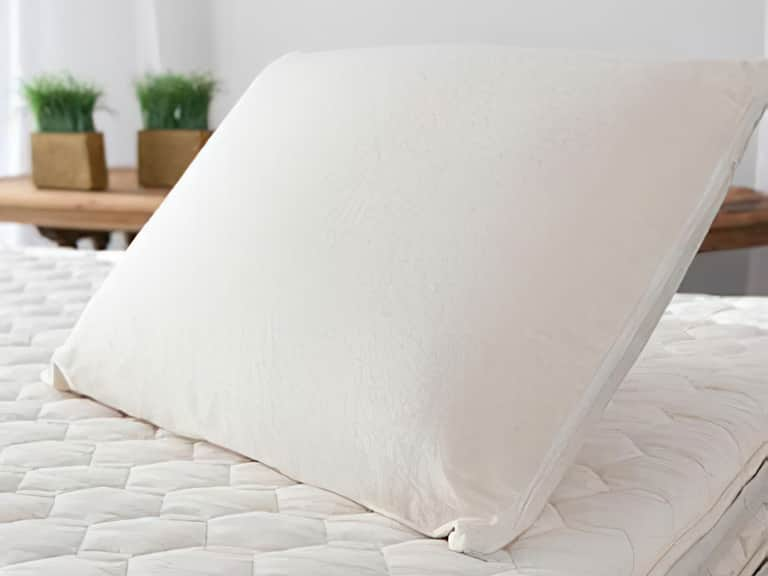
Similarly, a pillow can influence comfort around the head and neck without being a treatment for sleep disorders or pain. The Savvy Rest Organic Latex Soap-Shaped Pillow has a molded Dunlop latex form, hollow channels, and a removable organic cotton outer casing. Its described shape is intended for side sleepers. Those details may help someone decide whether its construction seems relevant, but fit depends on sleeping position, shoulder width, mattress softness, and personal preference. A pillow should not be expected to compensate for an unsuitable mattress or a persistent medical problem.
Design the room around air, shade, and calm
Once the bed is understood, attend to the room around it. Ventilation can be helpful, but the right approach depends on climate, outdoor air quality, security, noise, and the building itself. Opening a window may refresh a stuffy room; in another setting, it may admit traffic, pollen, smoke, or a draft. A fan can help circulate air, though its noise or direct breeze may bother some people. The useful question is not whether one method is universally natural, but whether it makes this room more comfortable without creating a new disturbance.
Light deserves equal attention. The body’s daily timing is responsive to patterns of light and darkness, and regular exposure to daylight—particularly earlier in the day—can support a stable sleep-wake schedule. At night, reducing bright light may make the bedroom feel more conducive to winding down. A full blackout is not necessary for everyone, and some people prefer a dim night-light for safety. Start with the light that actually reaches the bed. A well-fitted curtain, a changed lamp position, or the simple act of turning a glowing device away may prove more useful than dramatic décor.
Noise is trickier because it is not always possible to eliminate, and efforts to control it can become their own source of attention. Soft furnishings may reduce some room echo, though they cannot soundproof a home. Earplugs or steady background sound may suit some sleepers and bother others; anyone considering them should use products comfortably and safely. If noise is coming from an appliance, a loose fitting, or a recurring mechanical fault, addressing the source is often more sensible than trying to disguise it.
Keep the bedroom’s purpose modest. A room need not be styled as a sanctuary in order to function well, and a perfect-looking bedroom is not the same thing as a comfortable one. Clear the route to the bed, keep frequently used items within easy reach, and avoid adding objects that collect dust or require maintenance you do not want. A calm space can be plain. Its quietness may come from having fewer small decisions to make at the end of the day.
For people drawn to nature, a restrained palette or a few natural textures can suggest the outdoors without turning the room into a themed retreat. But plants, essential oils, and herbal products are not obligatory features of a natural sleep environment. Some can trigger allergies or sensitivity, and evidence for sleep-related effects varies. “Natural” should describe an approach to attention and choice, not a promise of safety or efficacy for every person.
A small, seasonal plan
Seasonal living is one of the more practical connections between a garden and a bedroom. Sunlight, humidity, outdoor temperature, and the length of the day change over the year; the room responds whether or not anyone has made a plan. Rather than wait for discomfort to become a nightly complaint, review the bedroom when the season turns.
- As warmer weather arrives: Reconsider heavy bedding, notice where afternoon sun heats the room, and think about ventilation that does not invite disruptive light or noise.
- When nights grow cold: Check for drafts and choose layers that are easy to add or remove rather than relying on one overly warm cover.
- As mornings brighten: Review curtains and the timing of daylight in the room; also consider getting useful natural light during waking hours.
- When routines shift: Keep wake times and evening habits as consistent as circumstances reasonably allow, rather than demanding perfection from the environment.
A seasonal review need not mean replacing bedding every few months. It might consist of washing a cover, rotating a lighter blanket into reach, moving a fan, or adjusting a curtain. The point is responsiveness: a bedroom that can adapt without a major renovation is often more useful than one optimized for a single temperature or mood.
When the room is not the whole story
Environmental changes can support comfort, but repeated sleep difficulty is not always an environmental problem. Persistent trouble falling asleep, frequent waking, loud snoring, gasping, uncomfortable sensations in the legs, or substantial daytime sleepiness can have causes that bedding cannot address. If sleep problems continue, interfere with daily life, or raise concern, consider speaking with a qualified health professional. A bedroom checklist is not a diagnostic tool, and an organic mattress is not a substitute for care.
Light sleepers are sometimes treated as if they have failed to master relaxation. That idea is neither especially useful nor particularly kind. Some people are more responsive to their surroundings; others are in a season of stress, illness, caregiving, or irregular work that makes sleep difficult for reasons beyond the room. The aim is not to blame the sleeper for noticing a noise, nor to insist that every interruption can be engineered away. It is to identify the changes that are both possible and worthwhile.
If worry about sleep itself has become part of the problem, consider keeping the experiments few and gentle. A long list of sleep rules can make bedtime feel like an examination. Choose one likely source of disturbance, make one manageable adjustment, and give it time. If it does not help, that is information—not a personal failure. The most useful design sometimes begins by making the room less demanding, not by asking its occupant to become perfectly serene.
The patient bedroom
A permaculture-inspired bedroom is built on a simple premise: the room has patterns worth noticing. A mattress may be the right place to begin because comfort and support matter, but it is not a universal answer to every restless night. Compare construction and materials with the body’s actual needs; look beyond labels to fit, care, and trial terms; and remember that no single material guarantees better sleep.
Then widen the view. Follow the movement of light, listen for recurring sound, notice the room’s temperature near dawn, and consider whether air circulates comfortably. Choose bedding for its feel and care requirements, not for promises it cannot make. Adjust one thing at a time. In this approach, the bedroom becomes less a project to complete than a small habitat to understand—a place where the most effective improvement may be a better mattress, a lighter cover, a darker window, or simply the knowledge of what has been waking you.
There is a quiet relief in that kind of attention. It does not demand a perfect room or a perfect night. It asks only that the environment be treated as something living with the sleeper, changing through the day and season, and capable—within limits—of being made more comfortable.