Bedding & Sleep Comfort
Organic Cotton or Wool? Choosing Breathable Bedding for Sensitive Rest
Cotton brings a crisp, familiar lightness to the bed; wool offers a more insulating kind of breathability, absorbing moisture and tempering shifts in warmth. Choosing between them is less a matter of declaring a winner than of noticing how your body, room, and bedtime habits meet the material.
Some nights, the bed seems to have acquired a climate of its own. A sheet twists around a leg; the comforter feels suddenly too warm; a pillow, perfectly agreeable at ten, has become a small, heated landscape by two in the morning. For light sleepers, small changes in texture and temperature can feel conspicuous. Bedding cannot guarantee uninterrupted rest, but the fibers closest to the body can make a sleep environment feel more or less comfortable.
Organic cotton and wool are often grouped together under the broad heading of natural materials. That description is true but not especially useful on its own. Cotton and wool feel different, handle moisture differently, and tend to appear in different parts of a bedding system. Cotton is familiar in sheets and covers, where a weave can make it smooth, crisp, or softly draped. Wool is common in pillows, mattress pads, and comforters, where its spring and insulation can help moderate the feel of a layer.
The practical question is not simply which fiber is “better.” It is which combination suits your preferred texture, room conditions, sleep position, care routine, and tendency to feel warm or cool. A breathable sheet cannot compensate for every source of discomfort, but choosing materials deliberately can remove one avoidable source of friction.
What breathable bedding really means
Breathability is often used as though it were a single measurable sensation. In bed, it is better understood as a group of related qualities: how readily air moves through a fabric, how a surface feels against the skin, how moisture is taken up and released, and how much warmth a layer holds. Construction matters as much as fiber. A tightly woven fabric and an airy knit made from the same material may feel quite different.
Sleep comfort also depends on the room and the sleeper. A cool bedroom, a warm bedroom, heavy bedding, a partner who prefers a different temperature, and an individual tendency to perspire can all change how a material feels. Even the rest of the bedding matters. Sheets sit against the body, while a comforter holds warmth above it and a mattress protector lies between the sleeper and the mattress. Judging only one layer can produce a misleading verdict.
It helps to separate two ideas that are sometimes blurred together. A fabric may allow airflow and still feel warm because of its weight or the layers above it. Conversely, a lightweight fabric may feel cool at first touch without managing moisture in a way that suits every sleeper. “Breathable” is a useful starting point, not a promise of a particular temperature or an answer to every sleep concern.
The cotton side: crisp, smooth, familiar
Organic cotton is a plant fiber used in sheets, pillowcases, duvet covers, and mattress protectors. Its character at bedtime depends significantly on the way it is spun, woven, finished, and cared for. Percale, for instance, is generally associated with a crisp, matte hand and an airy feel. Sateen tends to have a smoother surface and a subtle sheen. Neither weave is universally cooler or more comfortable: the distinction is as much about touch and drape as it is about temperature.
For sleepers who dislike a plush or clingy surface, percale may feel reassuringly straightforward. Its texture has a little structure; it does not drape in quite the same silky way as sateen. A cotton sateen sheet may be appealing to someone who wants a smoother, softer-feeling surface. Both can be sensible options in a breathable bedding setup, provided the fabric weight and the room’s conditions suit the sleeper.
Organic describes how the cotton was grown and processed under a particular certification standard; it does not, by itself, dictate whether a sheet will feel crisp, soft, cool, or durable. For that, look at the weave, fabric weight, finishing, care information, and relevant certifications. Thread count can offer some context, but it is not a complete measure of quality or comfort. A higher number alone does not tell you whether a sheet will feel right on your skin.
Organic cotton percale sheets can be a good point of comparison for people who like an uncomplicated, crisp surface. For example, the Sleep and Beyond 100% Organic Cotton Percale Sheet Set is described as a 270-thread-count, GOTS-certified cotton percale with a lightweight, crisp feel. Those details may help a shopper understand the fabric and its construction, but personal comfort is still best judged by feel, fit, and the conditions in which the sheets will be used.
Cotton’s broad familiarity is practical, too. Many cotton sheets can be machine washed, although the label should always take precedence over general expectations. Fit matters: a fitted sheet that is too shallow may pull loose, while one with excess fabric can bunch beneath the body. For a light sleeper, a wrinkle or tight corner may be a more immediate disturbance than a subtle difference in fiber performance.
The wool side: insulation with moisture management
Wool is often valued for a particular combination of qualities. Its structure can trap air, giving it insulating capacity, while the fiber can also take up some moisture without immediately feeling wet. This does not mean wool cools every sleeper, or that it will prevent perspiration. Rather, wool may suit people who want a layer that feels cushioning and temperate, especially when used in a pillow, mattress pad, or comforter.
The word “breathable” can seem at odds with “insulating,” but the two are not opposites. A wool layer can hold warmth while also allowing some exchange of air and moisture. How that balance feels depends on the amount of wool, the surrounding fabrics, the construction, the room, and the person using it. A thick wool comforter under several blankets will not behave like a lightweight wool-filled pillow in a cool room.
Wool’s texture also varies. Some wool bedding has a soft, springy feel; other constructions may feel firmer or more substantial. In a pillow, wool fill may provide a resilient, somewhat even cradle rather than the very yielding feel of some down or foam designs. In a comforter, wool can offer a less slick, more substantial kind of loft. Those are tactile distinctions, not guarantees of better sleep.
Care deserves attention before purchase. Some wool items can be washed in specific ways, while others are best spot-cleaned, aired, or protected by a removable cover. Heat, agitation, and unsuitable detergents can damage wool or alter its shape. If a household’s routine depends on frequent machine washing, a washable wool design or a protective cover may be more practical than an item with restrictive care instructions. The words “natural” and “low maintenance” are not interchangeable.
A sensitive sleeper needs more than a fiber label
People use “sensitive” in different ways. It may mean a strong preference about texture, a tendency to wake when warm, discomfort from seams or bunching, or concern about particular materials. These are not the same problem, and no single fiber solves all of them. Someone bothered by a slick surface may prefer cotton percale; someone who notices temperature swings may want to test a wool layer. A person with a known allergy or skin condition should rely on advice from an appropriate health professional rather than assume that a natural fiber is automatically suitable.
Certification labels can help answer specific questions about how a textile was produced or tested, but they are not medical guarantees. Read what a certification covers, and distinguish it from broad marketing language. If you are sensitive to fragrances or detergent residues, laundering new bedding before use with a familiar detergent may be a useful, low-effort step. Follow the care label, and avoid introducing several new products at once if you are trying to identify what feels comfortable.
For people who wake easily, predictability can matter. A sheet that stays in place, a pillow with the right height, and a comforter that is neither too heavy nor too light may contribute more to perceived comfort than an abstract claim about fiber. Bedding is not a treatment for insomnia or another sleep disorder. Persistent sleep problems, significant discomfort, or symptoms such as ongoing nighttime breathing difficulties deserve professional attention.
Think in layers, not loyalties
A bed is a small system. The sheet touches the skin. A mattress protector may add a layer beneath it. A pillow supports the head and neck; a comforter or duvet cover changes how warmth is held. If one part feels wrong, replacing every part of the bed is rarely the most informative first move. Consider the layer most closely associated with the discomfort, then make one change at a time.
- Start with the sheet. If the surface feels too smooth, too rough, or too warm, compare weave and weight before moving on to the whole bedding set.
- Check the mattress protector. A protector can affect the feel of the bed beneath the sheet. Cotton jersey, for example, stretches and conforms differently from a waterproof construction.
- Review the pillow. Loft and firmness influence neck comfort and can affect how much of the face and head is surrounded by bedding.
- Consider the comfort layer. A wool-filled comforter, a lighter insert, or a different duvet cover can change warmth without requiring new sheets.
- Notice the room. Temperature, ventilation, and the weight of blankets may explain more than a change in fiber alone.
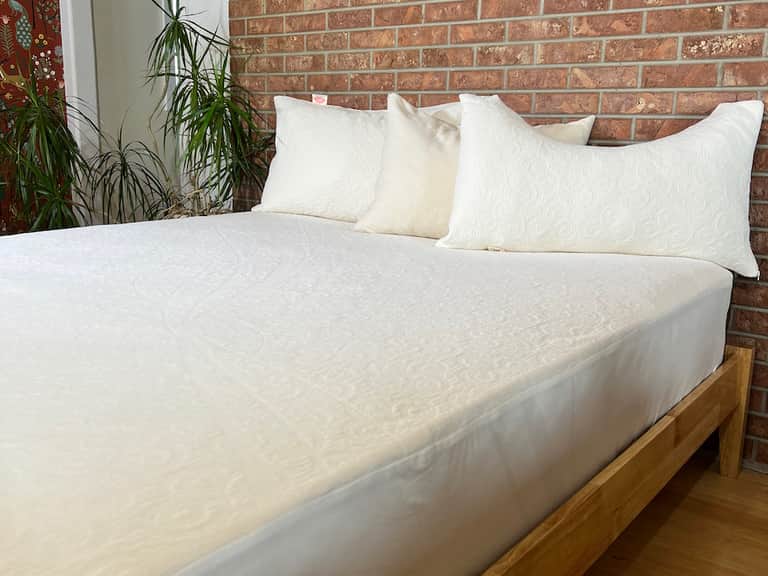
For a simple cotton layer beneath the sheet, the Suite Sleep Organic Cotton Knit Mattress Protector is described as a fitted, stretch-knit protector made from GOTS-certified organic cotton, with 18-inch pockets. Its jersey construction is intended to conform to the mattress rather than add a bulky layer. As with any protector, confirm that the fit and care requirements suit your mattress and laundry routine.
How to choose between cotton and wool
Begin with the sensation you want, not a category label. If you imagine a clean, cool-feeling sheet with a little crispness, cotton percale may be the more natural place to start. If you prefer a smooth, draped surface, cotton sateen may be a better match. If the question concerns a cushion or comfort layer, wool’s spring and insulating character may be worth considering. Different fibers often belong in different roles; there is no requirement that a bed be made from one material from top to bottom.
Next, consider your room across the seasons. A bedroom that is warm for much of the year may call for lighter sheets and a less substantial cover. A cooler room may make a wool layer feel welcome, while a hot sleeper may prefer to use it only in a smaller or lighter-weight component. Seasonal needs can change, and bedding that works in January may feel different in July. A practical setup may include a lighter layer that can be removed rather than one all-season arrangement that never quite suits.
Then check the details that are easy to overlook: mattress depth, pillow dimensions, whether a cover is removable, whether the fill can be adjusted, and how the item should be washed or aired. A pillow that is washable only in part, or a comforter that calls for special care, may be entirely acceptable—if you know that before it joins the household. Useful product information is specific about materials and maintenance, not merely poetic about comfort.
Finally, give changes time, but not mystique. A new sheet can feel unfamiliar for a few nights, and laundering may alter its hand. Keep a brief note of what you notice: warmth, moisture, roughness, shifting, and whether the discomfort occurs in a particular season. Small observations are more valuable than trying to remember, weeks later, whether a fabric was “better.”
Care is part of comfort
Textiles change with use. Cotton may soften after washing; shrinkage and drying temperature vary by product. Wool can retain its shape when cared for properly, but it may be vulnerable to heat or rough handling. Always follow the manufacturer’s instructions, especially for pillows and comforters whose inner fill cannot be treated like a sheet. When in doubt, a removable pillow protector or duvet cover can keep everyday soil away from the more difficult-to-clean layer.
Wash bedding often enough for the household’s needs and in accordance with its care label. Use a detergent and temperature that are suitable for the fabric, and avoid assuming that more detergent means a cleaner result. Thorough drying matters: lingering dampness can make bedding unpleasant and may encourage odors. Airing wool items, where the care directions permit, can be a useful way to refresh them between deeper cleaning.
Care requirements are not a minor footnote. They shape whether a product remains comfortable and usable over time. A delicate item that is beautiful but burdensome to maintain may not be the most restful choice for a busy household. The best bedding is not only pleasant on the first night; it is workable on the fiftieth laundry day.
A thoughtful comparison, without a universal winner
Organic cotton and wool answer different needs. Cotton sheets offer a familiar surface whose feel can shift from crisp to smooth depending on the weave. Wool can bring insulation, resilience, and moisture-handling qualities to pillows and comfort layers. Cotton often makes an intuitive starting point for the fabric directly against the skin; wool may be an appealing component when the sleeper wants warmth that feels less static or a fill with natural spring.
For many beds, the most useful answer is a mix. Cotton sheets can provide the preferred surface while a wool pillow or comforter contributes a different kind of support or warmth. That arrangement is not a compromise. It recognizes that the layers have different jobs. A person may also prefer cotton in summer and add wool in colder months, or choose a wool pillow while keeping the rest of the bed simple.
Consider the experience you are trying to change, then choose the smallest relevant adjustment. Look for clear information about fiber, weave, fill, construction, certifications, and care. Be wary of claims that promise to cure a health condition or deliver perfect sleep simply because a product is natural. Materials can influence comfort; they cannot control every part of sleep.
A practical checklist before you decide
- Do you prefer a crisp, matte sheet or a smoother, more fluid surface?
- Do you usually feel warm, cool, or comfortable until the temperature changes overnight?
- Which layer seems to be causing the problem: sheet, pillow, protector, or comforter?
- Will the item fit your mattress or pillow without pulling, shifting, or bunching?
- Are the material and certification details clear, and do they address what matters to you?
- Can you care for the item according to its instructions?
- Would changing one layer first give you a clearer sense of what works?
The quiet art of making a bed more comfortable
There is a certain appeal to the idea that rest begins in a field, with fibers grown or gathered from the natural world and carried into the bedroom. But the useful story is a less romantic one: comfort is made from particulars. A weave against the skin. A pillow at the right height. A cover that can be washed without a struggle. A layer that feels appropriate for the room, rather than for an idealized version of it.
Organic cotton and wool each have qualities worth understanding, but neither deserves to be treated as a magic word. Cotton can be crisp or smooth; wool can be insulating and moisture-managing. Both vary by construction and care. The gentlest approach is to observe your own nights, decide which sensation you want to improve, and adjust the bedding accordingly. The bed need not be perfect. It needs, more modestly, to feel like a place where the body can settle.